

Ken Ishiguro: five listening rooms in Isesaki...
5 Minutes ago
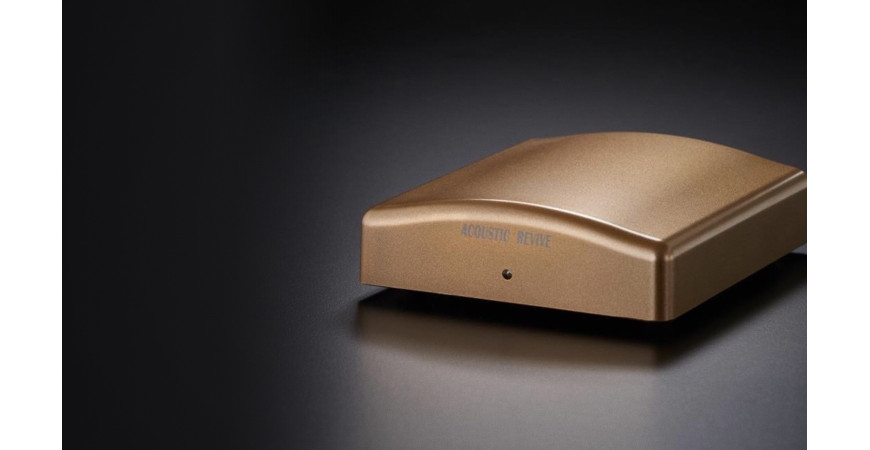
Sekiguchi Machine of Isesaki, Gunma Prefecture, designed and built large machines for making the concrete blocks used in road construction. Then Japan changed its public contracting law and companies like it were pushed out of the market. The workers were laid off. Two men stayed in the factory: the president, Ken Ishiguro, and the vice-president. Shortly afterwards the vice-president died of cancer.
Ishiguro had been an audiophile since his youth. Alone, with time on his hands and a job to invent, he built a prototype disc demagnetizer and put it on sale under a new name: Acoustic Revive. The year was 1997. The device was called the RD-1 and it sold well. Sekiguchi Machine has made audio cables and accessories ever since, with new products every year. The story was told by Wojciech Pacuła in High Fidelity.
Clement Perry of Stereo Times lands at Narita. From there it is another three hours by car: 17 hours of travel in all, he writes, to meet one man. Two Buddhist monks, audiophiles and friends of Ishiguro, put him up at a mountain resort.
Ishiguro is 44 at the time. Perry counts five listening rooms in his home. In 2013 Ishiguro lists six permanent systems for Pacuła: the first with Avalon Diamond speakers, a Viola Bravo power amplifier, Goldmund electronics and a Burmester transport; the second with Westlake BBSM15F speakers and bi-amped Pass Aleph 2 amplifiers; then a multichannel room, a computer-audio system with a rubidium clock, one in the living room and one in the bedroom. He uses the Westlakes for most music and the Avalons for classical. Thelonious Monk and John Coltrane sleeves hang at the entrance. About his ideas he jokes: UFOs bring them, at night.
That is the rule Ishiguro repeats. An accessory should remove noise and its effects, so that the equipment performs at one hundred per cent. He distrusts large changes in tone: extra treble or bass may be noise or distortion masking the original information. High resolution, he says, sounds smooth, not harsh.
With cables he advises starting upstream, from the power cord between the wall socket and the distributor: it is like a river, and if the water is muddy at the source it is muddy further down. Accessories can be measured with spectrum analysers, and the Faculty of Engineering at Gunma University has analysed his products. But for timbre, he says, “the best measuring instrument is the human ear.”
The Schumann resonance is the natural frequency of the cavity between the Earth’s surface and the ionosphere: about 7.83 Hz. Ishiguro built a box that emits it into the room. It was called the RR-77, then the RR-777, now the RR-888. It goes high up, away from the system, and is not connected to it.
Mike Silverton, in Stereo Times, writes that with the RR-888 the soundfield becomes wider, deeper and closer, and that instruments and voices gain presence. He does not explain why. He tells of a visiting electrical engineer who made the comparison and could not explain it either. His conclusion: “At $685 USD, the RR-888 is something very like a must-have addition.” PlayStereo stocks the Acoustic Revive RR-888K Kiyo-Stone.
The K in the latest models stands for Kiyoh-stone, a mineral based on aluminium silicate. According to Acoustic Revive’s export agent, it is found in only one place in Japan: Gunma Prefecture, where the company is based. Ishiguro says this is no coincidence. He uses it because it emits negative ions, by his account up to forty times more than the tourmaline he used before.
Many products start at the edges of industrial research. The RPC-1 mains filter comes from Jun Shibata’s work on a prototype infrared mouse, which was disturbed by high-frequency noise on the mains. Shibata built a filter; Mr Fukushima of HWT bought the rights and turned it into an industrial filter. Ishiguro derived an audio version from it, with no capacitors. Pacuła, who reviewed the RPC-1K, ranks it among the two best filters of its kind he has heard at home.
In 2013 Ishiguro arrives in Kraków as a guest of the Krakow Sonic Society, with the whole catalogue: the boxes fill the hallway. He puts QR-8 quartz resonators everywhere: under the shelves, on the CD transport, on the power plugs, even on the fuse of the house mains. It is the test that impresses most: Robert, the group’s sceptic, says he is greatly impressed. Not everything convinces: the power cord swap is judged a step backward. At the end of the evening the Society presents Ishiguro with the Golden Fingerprint Award, created for the occasion.
Ishiguro’s cables have solid conductors with an oval cross-section. When Furukawa announced the end of PCOCC copper production on 4 March 2013, Acoustic Revive was among the first to use its successor, PC-Triple C, which comes from a forging process: the company compares it to the making of Japanese swords. In 2008 Perry saw the conductors threaded into a silk tube made for the purpose and assembled by hand by a craftsman, Mr Ubukata. The connectors came from Mr Matsumoto’s Matsukin, at the same address for over 45 years.
The RTP power distributors are machined from a solid block of duralumin: one takes seven days to make. Inside is a blend of green silicon carbide, tourmaline and powdered quartz. The metal parts go through cryogenic treatment at -196 °C.
Full Acoustic Revive cabling was used for the remastering of Santana’s Lotus, from the original multitrack tapes, in a session at Sony’s studio in Japan, and for the recordings at the 2014 Montreux festival. In 2013 Ishiguro counted fourteen consecutive golds for his accessories at Japan’s Audio Excellence Award.
In Isesaki he also has a hi-fi shop, Audio and Visual Space PROGIC, where he tries every accessory on different systems. The company lists six employees. Jeff Day of Positive Feedback has reviewed his products since February 2008: in sixteen years, he writes, not one has broken.
Wojciech Pacuła, interview with Ken Ishiguro, High Fidelity No. 109, 4 June 2013
Wojciech Pacuła, Krakow Sonic Society, meeting No. 88, High Fidelity No. 111, 7 August 2013
Wojciech Pacuła, Acoustic Revive RTP-4eu Ultimate, High Fidelity
High Fidelity, Acoustic Revive RCA-1.0 Absolute-FM
Wojciech Pacuła, Acoustic Revive RPC-1K, Positive Feedback issue 116, 13 August 2021
Wojciech Pacuła, Acoustic Revive RCA-1.5 Triple C-FM, Positive Feedback issue 77, 2 February 2015
Clement Perry, A Day in the Life of Acoustic Revive’s Ken Ishiguro, Stereo Times, 20 November 2008
Mike Silverton, Acoustic Revive’s RR-888, Stereo Times, 15 September 2014
Jeff Day, The Acoustic Revive Chronicles, Chapter 15, Positive Feedback issue 134, 10 July 2024
Acoustic Revive, company profile




























Please sign in first.
Sign in
Create a free account to use wishlists.
Sign inChoose which categories to enable. Necessary cookies are always active. You can change your choices at any time from “Cookie preferences” at the bottom of every page.
They make the site and the services you request work: cart, account login, language, site search (Motive), payments (PayPal, seQura, Scalapay), spam protection for forms (Cloudflare Turnstile) and remembering your cookie choices. Cookies: PrestaShop-… (20 days), PHPSESSID (until you close the browser), psc (6 months).
They show content from other services on our pages: Disqus comments and YouTube and Vimeo videos. These services may use their own cookies and collect data about your browsing. Until you enable them, you will see a box in their place from which you can do so.
They help us understand, in aggregate form, how the site is used and how quickly pages load. Services: Google Analytics (_ga and _ga_* cookies, 2 years) and New Relic.
They measure the effectiveness of our campaigns, show you relevant ads and personalise our emails based on your browsing. Services: Google Ads (_gcl_* cookies, 90 days) and Klaviyo (__kla_id cookie, 2 years).




 Italiano
 Deutsch
 Français
 Español