

Ken Ishiguro: five listening rooms in Isesaki...
5 Minutes ago
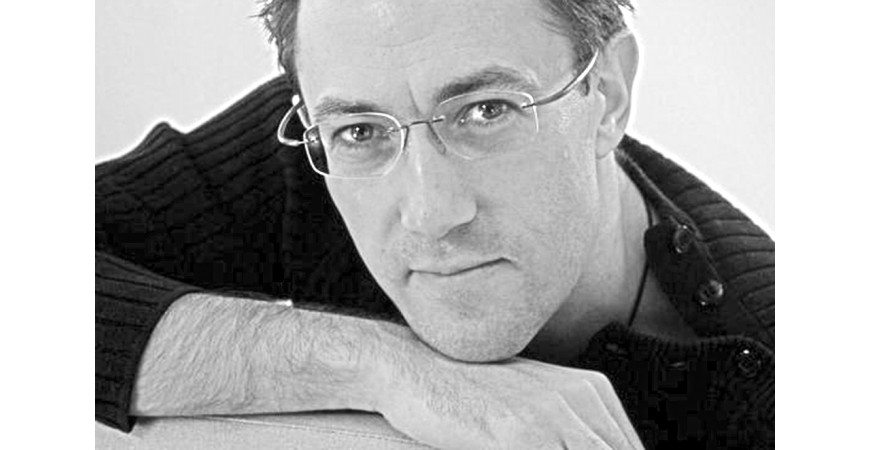
Nic Poulson has taken measurements on Heathrow’s main runway between landings, about ten metres from a passing Boeing 747. He told the story himself to StereoLife Magazine in 2015: at the time he was building transformers and control circuits for runway lights.
He is the same man who founded Trilogy Audio Systems in 1990, aged 23, while still working at the BBC. Today he designs every Trilogy component and those of ISOL-8, the company through which he builds filters and power supplies for audio systems.
Poulson described his childhood to Tomasz Karasiński, who interviewed him for StereoLife Magazine on 20 October 2015. At four he was assembling electronics kits. At seven he built a solid-state amplifier with germanium transistors, powered by two old car batteries. He lived in a quiet village with few children his age, and music reached him mostly through the radio. By fourteen he had a system of his own. As a teenager he discovered valves.
He studied telecommunications engineering and joined the BBC after one year of college. He worked as a sound engineer in the Film Department at Ealing Film Studios. He describes it as an old-school, disciplined place: a trainee spent three years there before working alone. ISOL-8 writes in its company history that it was there Poulson learned to strive for excellence in every area of the work. Before leaving the BBC he bought a Studer C37 tape machine, which he hopes to restore.
Before Trilogy he had designed three valve preamplifiers for a friend, sold under the Foundation brand. He was 23 when he founded Trilogy, and he stayed at the BBC for about three more years. The first products were valve designs. Wojciech Pacuła, in Positive Feedback (issue 78, March-April 2015), traces what followed: after some quiet years the first hybrid arrived in 2008, the 990 integrated amplifier; then the 907 phono stage in 2010, the 933 headphone amplifier in 2012 and the 925 integrated in 2013.
With a friend, Poulson founded an airfield lighting company. They designed and built waterproof high-voltage transformers and control circuits for runway lights. He told StereoLife that their products lit the major international runways in the UK and many military runways at home and abroad, and that the company sold more than 10,000 of them. Dawid Grzyb, in 6moons (June 2021), describes those circuits as built to withstand harsh weather.
About ten years after Trilogy, Poulson founded IsoTek with Keith Martin and Peter Dolding: he handled the designs, his partners marketing and management. After about three years their paths diverged. Poulson left and founded ISOL-8; Positive Feedback gives 2001 as the year. He says he took the intellectual property of the designs with him, which is why the first ISOL-8 products were almost identical to the IsoTek ones.
ISOL-8 states on its website that Poulson pioneered the use of multiple filter sections, to reduce the noise that passes from one component to another, and that he championed DC blocking. He explained the idea to StereoLife: the components themselves often pollute the supply more than the mains does, and filtering each outlet separately reduces the problem. In 2021 ISOL-8 introduced Prometheus, a linear DC power supply. Reviewing it, Grzyb writes that oversized power supplies are Poulson’s signature, even in the least expensive model.
Poulson says he is passionate about analogue electronics. He understands digital circuits, but he does not feel them as his own. And he admits a limit: “I had little or no feeling for speakers.” That is why he keeps several pairs at home, among them Rogers LS3/5a and KEF LS50: he needs them to hear what his designs do. In 2015 his system had a Brinkmann turntable, a Koetsu Rosewood cartridge, an Esoteric K-01 CD player and Trilogy amplification.
These ideas show in the 925. Poulson told Positive Feedback that an integrated amplifier allows a short signal path and, often, one gain stage fewer than a separate preamplifier and power amplifier. He wanted it balanced all the way to the speaker terminals. The input uses a pair of 6H6П triodes in Class A. The output stage, with MOSFETs and bipolar transistors, has no overall feedback: in his view, all else being equal, zero-feedback amplifiers give music a better flow and cause less listening fatigue. The 925 has three power transformers and delivers 135 W per channel into 8 ohms.
The Trilogy 925 is in the PlayStereo catalogue.
In May 2025 Alan Sircom reviewed the Trilogy 914 preamplifier and 994 mono power amplifiers for hi-fi+. He compared the 994s with the Takumi K-160 from Robert Koda, the Japanese brand of Robert Koch, who worked for many years at Hiroyasu Kondo’s Audio Note Japan. In the 994s Sircom finds the same transparency, the same solid imaging, the same grace and the same sense of rhythm; in Class A, he writes, they come extremely close. A pair of 994s costs one-eighth of a pair of K-160s. His summary: “Over 95% of the performance for 12.5% of the price.”
Tomasz Karasiński, interview with Nic Poulson, StereoLife Magazine, 20 October 2015
Wojciech Pacuła, Trilogy 925, Positive Feedback issue 78, March-April 2015
Dawid Grzyb, ISOL-8 Prometheus, 6moons, June 2021
ISOL-8 Teknologies, company history
Alan Sircom, Trilogy 914 and 994, hi-fi+, 12 May 2025
Becky Scarrott, Robert Koda Takumi K-15 EX, What Hi-Fi?, 29 April 2021




























Please sign in first.
Sign in
Create a free account to use wishlists.
Sign inChoose which categories to enable. Necessary cookies are always active. You can change your choices at any time from “Cookie preferences” at the bottom of every page.
They make the site and the services you request work: cart, account login, language, site search (Motive), payments (PayPal, seQura, Scalapay), spam protection for forms (Cloudflare Turnstile) and remembering your cookie choices. Cookies: PrestaShop-… (20 days), PHPSESSID (until you close the browser), psc (6 months).
They show content from other services on our pages: Disqus comments and YouTube and Vimeo videos. These services may use their own cookies and collect data about your browsing. Until you enable them, you will see a box in their place from which you can do so.
They help us understand, in aggregate form, how the site is used and how quickly pages load. Services: Google Analytics (_ga and _ga_* cookies, 2 years) and New Relic.
They measure the effectiveness of our campaigns, show you relevant ads and personalise our emails based on your browsing. Services: Google Ads (_gcl_* cookies, 90 days) and Klaviyo (__kla_id cookie, 2 years).




 Italiano
 Deutsch
 Français
 Español